
Buy Euro Pallets: Specifications, Pricing Factors, and Supplier Guide
If you’re looking to buy Euro pallets, you’re likely past the research phase. You already know what a pallet is.Now you need answers to practical questions: Are these pallets built to true Euro standards? Will they pass export and warehouse checks? Can the supplier deliver consistent quality at scale? This guide is written for that moment. What You’re Buying When You Buy Euro Pallets A Euro pallet (EUR / EPAL pallet) is a standardized wooden pallet used across Europe and global supply chains. The value isn’t the wood.It’s the standardization. When you buy Euro pallets, you’re buying: Predictable dimensions Known load capacity Compatibility with European warehouses, racking, and handling systems If a pallet doesn’t meet the spec, it isn’t a Euro pallet—no matter what it’s called. Euro Pallet Size (Non-Negotiable) Standard Euro pallet dimensions: 1200 mm × 800 mm Always. Anything else is a custom pallet, not a Euro pallet. Other fixed characteristics: Four-way entry Compatible with forklifts and pallet jacks Designed for stacking and racking Typically manufactured from pine or hardwood If you’re exporting to Europe, this size is expected—not optional. Euro Pallet Load Capacity When manufactured correctly, a Euro pallet typically supports: Static load: up to 4,000 kg Dynamic load: up to 1,500 kg Racking load: up to 1,000 kg Actual performance depends on: Wood quality Nail pattern Manufacturing consistency This is where supplier quality matters most. Are Euro Pallets Export-Ready? Yes—when heat treated. Euro pallets used for international shipping must be ISPM-15 compliant. That means: Heat treated (HT) Properly marked Accepted by customs authorities If you’re exporting goods, always confirm ISPM-15 treatment before buying. New vs Used Euro Pallets (What Should You Buy?) Both are sold. They serve different needs. New Euro Pallets Higher upfront cost Longer usable life Preferred for exports and regulated industries Lower risk of rejection Used Euro Pallets Lower cost Suitable for internal logistics Must still meet structural standards For exports, most buyers choose new Euro pallets. What Affects Euro Pallet Price? Euro pallet pricing depends on: Wood type and grade Heat treatment requirements Quantity ordered New vs used pallets Delivery location There is no single “cheap” Euro pallet—only pallets that meet the spec, and pallets that don’t. Failures cost more than savings. Who Typically Buys Euro Pallets? Euro pallets are commonly purchased by: Exporters shipping to Europe FMCG and retail distribution companies Pharmaceutical and healthcare suppliers Automotive and industrial manufacturers Warehouses using racking or automation If your customer or logistics partner specifies Euro pallets, substitutes usually won’t be accepted. What to Check Before You Buy Euro Pallets Before placing an order, confirm: Exact dimensions: 1200 × 800 mm ISPM-15 heat treatment (for exports) Load capacity suitability Build consistency across batches Supplier’s ability to deliver repeat orders A Euro pallet should behave the same every time. Buying Euro Pallets in India Euro pallets are available in India—but quality varies widely. Some suppliers sell “Euro-size pallets” that don’t meet true standards. When sourcing locally: Ask for specification confirmation Verify export compliance Check manufacturing consistency A reliable supplier will answer these questions clearly. Final Word Euro pallets aren’t about innovation. They’re about reliability. If your supply chain touches Europe—or relies on standardized handling—buying the right Euro pallet matters more than buying the cheapest one. Looking to Buy Euro Pallets? If you need export-ready Euro pallets with consistent specifications and dependable supply, work with a supplier who understands the standard—not just the keyword. 📞 Contact us to discuss quantities, specifications, and delivery timelines. Faqs: Support and Guidance Resources What is the standard size of a Euro pallet? The standard Euro pallet size is 1200 × 800 mm. Any pallet with different dimensions is not considered a true Euro pallet. Can I buy Euro pallets in India? Yes, Euro pallets can be purchased in India from manufacturers and suppliers that follow Euro pallet specifications and ISPM-15 export requirements. Are Euro pallets suitable for export to Europe? Yes. Euro pallets are widely accepted across European warehouses and logistics networks, especially when they are ISPM-15 heat treated. What affects the price of Euro pallets? Euro pallet pricing depends on whether the pallet is new or used, wood quality, ISPM-15 treatment, order quantity, and delivery location. How do I verify a true Euro pallet before buying? A true Euro pallet measures 1200 × 800 mm, has four-way entry, consistent construction, and ISPM-15 heat treatment for exports. Do Euro pallets work with automated warehouses? Yes. Euro pallets are commonly used in automated and racked warehouse systems due to their consistent dimensions.
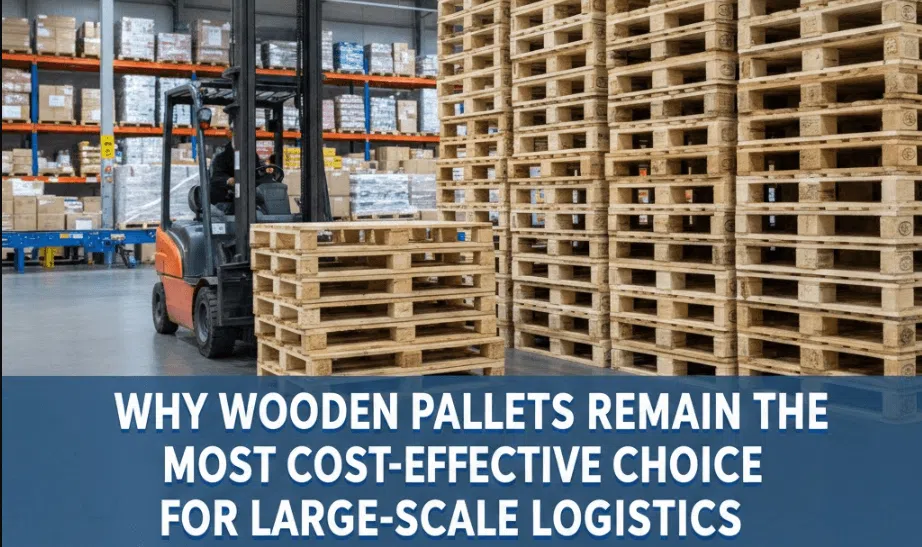
Why Wooden Pallets Remain the Most Cost-Effective Choice for Large-Scale Logistics
This guide is purpose-built for procurement leaders and CXOs evaluating ROI at scale, bulk wooden pallet buyers optimizing total cost of ownership, and exporters requiring ISPM‑15 compliant pallets for global shipments. Every section is crafted to support high‑conversion, bottom‑of‑the‑funnel decisions, while reinforcing Indus Pallet’s position as a trusted, industrial‑grade manufacturer capable of delivering consistent quality, compliance, and supply at scale. In large-scale logistics, warehousing, and export operations, every operational decision directly impacts margins. From transportation costs to product safety and compliance, businesses constantly evaluate where they can optimize without compromising reliability. One such critical yet often underestimated component is pallet selection. Despite the rise of alternative materials, wooden pallets continue to dominate global supply chains. They remain the preferred choice for manufacturers, exporters, FMCG brands, pharmaceutical companies, and heavy industries handling high volumes daily. The reason is simple: wooden pallet deliver the best balance of cost-efficiency, strength, compliance, and scalability. In this transactional guide, we break down why wooden pallet are still the most cost-effective solution for large-scale logistics, how they outperform alternatives in real-world operations, and what buyers should look for when sourcing from a reliable manufacturer like Indus Pallet. Understanding the True Cost of Pallets in Logistics When businesses assess pallet costs, many focus only on the unit price. However, in high-volume logistics, the total cost of ownership (TCO) is what truly matters. Factors That Define Pallet Cost-Effectiveness A pallet’s real cost is influenced by: Initial purchase price Load-bearing capacity Lifespan and repairability Compatibility with forklifts and racking systems Export and compliance readiness Replacement frequency Transportation efficiency Wooden pallet consistently score high across all these parameters, making them a financially sound choice for enterprises operating at scale. Why Wooden Pallets Outperform Alternatives at Scale 1. Lowest Cost Per Unit for Bulk Procurement For businesses requiring thousands of pallets per month, wooden pallet offer the most competitive pricing. Raw material availability, local sourcing, and streamlined manufacturing processes allow suppliers like Indus Pallet to deliver cost advantages that plastic or metal pallets simply cannot match. When purchased in bulk, wooden pallet significantly reduce per-unit logistics costs—an immediate win for procurement and finance teams. 2. High Load-Bearing Strength for Heavy-Duty Operations Industrial-grade wooden pallet are engineered to handle: Heavy static loads in warehouses Dynamic loads during forklift handling Long-distance transportation stress Hardwood and softwood pallet options can be customized based on load requirements, ensuring maximum strength without overengineering costs. This makes wooden pallets ideal for: Automotive components Cement and construction materials FMCG bulk packaging Machinery and equipment 3. Repairability Extends Pallet Lifecycle One of the biggest cost advantages of wooden pallet is their repairability. Broken planks can be replaced Nails can be reinforced Structural integrity can be restored Unlike plastic pallets, which often need complete replacement when damaged, wooden pallets can be reused multiple times with minimal repair costs. This dramatically lowers lifecycle expenses in large-scale operations. Export-Ready Compliance: A Major Cost Saver ISPM-15 Compliance for Global Trade Exporters face strict international regulations, especially when shipping goods overseas. ISPM-15 compliant wooden pallet—treated through heat treatment or fumigation—are mandatory for most global markets. Wooden pallets are naturally suited for this requirement: Easy to treat and certify Globally accepted Cost-effective compared to alternative export solutions Indus Pallet supplies fully compliant, export-ready wooden pallet, helping exporters avoid shipment delays, penalties, or rejection at ports. Transportation Efficiency and Space Optimization Lightweight Yet Strong Wooden pallet provide an optimal strength-to-weight ratio. They are lighter than metal pallets and strong enough for most industrial loads. This results in: Lower freight costs Better fuel efficiency Easier handling during loading and unloading Stackability and Storage Efficiency Standardized wooden pallet designs allow for efficient stacking and storage, reducing warehouse space requirements and improving inventory management. Wooden Pallets vs Plastic Pallets: Cost Comparison at Scale Criteria Wooden Pallets Plastic Pallets Initial Cost Low High Bulk Availability High Moderate Repairability Yes Limited Export Compliance Easy (ISPM-15) Often exempt but costly Load Strength High Medium to High ROI Over Time Strong Depends on usage For large-scale, cost-sensitive logistics, wooden pallets clearly deliver superior ROI. Custom Wooden Pallets: Optimizing Cost Further Tailored to Your Load and Operations Custom wooden pallet allow businesses to: Reduce material waste Optimize load distribution Minimize product damage Improve warehouse racking efficiency Instead of paying for over-designed standard pallets, businesses can invest in fit-for-purpose designs that reduce operational inefficiencies. Indus Pallet specializes in custom wooden pallet manufacturing, ensuring every pallet matches the client’s exact load and handling requirements. Industries That Rely on Wooden Pallets at Scale Wooden pallets remain indispensable across industries: FMCG & Retail: Cost-effective for high-volume distribution Pharmaceuticals: Strong, stable pallets for bulk movement Manufacturing: Ideal for raw materials and finished goods Automotive: Handles heavy components securely Exports & Shipping: Globally accepted and compliant Their versatility further reinforces why wooden pallet remain the backbone of logistics worldwide. Sustainability and Environmental Value Wooden pallets are not just economical—they are environmentally responsible. Made from renewable resources Repairable and reusable Recyclable at end of life Lower carbon footprint compared to plastic alternatives For businesses aligning logistics decisions with ESG goals, wooden pallets offer a compelling advantage. Choosing the Right Wooden Pallet Manufacturer Cost-effectiveness depends heavily on supplier reliability. Buyers should evaluate: Manufacturing capacity Quality control standards Compliance certifications Customization capabilities Delivery timelines After-sales support Why Businesses Choose Indus Pallet Indus Pallet stands out as a trusted wooden pallet manufacturer by offering: Industrial-grade raw materials ISPM-15 compliant treatment Custom and standard pallet options Bulk supply capabilities Consistent quality at scale This ensures businesses receive pallets that deliver long-term value, not just low upfront pricing. Bulk Procurement: What Buyers Should Know For enterprises sourcing pallets in bulk, consider: MOQ and pricing slabs Lead time consistency Quality uniformity across batches Logistics and delivery support Indus Pallet works closely with procurement teams to provide predictable pricing and reliable supply, critical for uninterrupted operations. Export-Focused Buying Considerations for High-Volume Shipments For exporters and enterprises shipping at scale, pallet selection is not a tactical decision—it is a risk, cost, and compliance decision. Wooden pallets remain
Wooden Pallets Export Made Easy: Why India Is the World’s Preferred Supplier

Wooden Pallets Export is a critical enabler of international trade, ensuring that goods move safely, compliantly, and efficiently across borders. In global logistics, pallets are not just load carriers—they are structural components of the supply chain that directly affect cargo safety, customs clearance, and operational efficiency. As shipment volumes increase and regulatory scrutiny tightens, the role of export-grade pallets has become more strategic than ever. Why Pallet Quality Directly Impacts International Shipments Export shipments are exposed to multiple handling points, long transit durations, and varying environmental conditions. Poorly engineered pallets increase the risk of load instability, product damage, and shipment delays. Structurally sound wooden pallets are designed to withstand stacking pressure, forklift handling, vibration during transit, and humidity changes—making them essential for maintaining cargo integrity throughout the export journey. Industries That Depend on Export-Grade Wooden Pallets Several industries rely heavily on Wooden Pallets Export for safe and compliant transportation. Pharmaceuticals require hygienic, contamination-free pallets. Food and agro-products depend on phytosanitary-compliant pallets to pass customs inspections. Heavy engineering, machinery, FMCG, textiles, and retail exports all require pallets engineered to match load specifications and destination regulations. In each case, pallet failure can translate into financial loss and reputational risk. What Global Buyers Look for in Wooden Pallets Export Suppliers International buyers evaluate pallet suppliers based on risk mitigation, compliance assurance, and long-term reliability. Price alone is no longer the primary decision factor; performance consistency and export readiness matter more. Export Compliance and Phytosanitary Standards (ISPM-15) ISPM-15 compliance is non-negotiable for Wooden Pallets Export. Buyers expect pallets to be heat-treated or fumigated according to international standards, clearly marked, and supported by verifiable documentation. Non-compliance can result in customs rejection, cargo re-export, or destruction at the destination port—making supplier compliance processes a top priority for importers. Engineering Specifications and Load Performance Export buyers increasingly demand pallets engineered for specific load requirements. Static, dynamic, and racking load capacities must align with cargo type and storage conditions. Moisture control, wood seasoning, and precise assembly all contribute to pallet durability. Custom designs are often required for oversized cargo, high-value goods, or automated warehousing systems. Supplier Reliability and Export Readiness Beyond manufacturing, buyers assess a supplier’s ability to manage lead times, scale production, and handle export logistics. Reliable Wooden Pallets Export suppliers demonstrate consistency across batches, maintain packaging discipline, and provide accurate export documentation. These factors reduce procurement uncertainty and supply chain disruptions. Why India Has Gained Global Trust in Wooden Pallets Export Over the past decade, India has steadily built a reputation as a dependable Wooden Pallets Export sourcing destination. This trust is rooted in manufacturing maturity, export experience, and a strong understanding of international buyer expectations. Mature Manufacturing Infrastructure and Skilled Workforce Indian pallet manufacturers operate with modern production facilities that include CNC cutting, kiln drying, and standardized assembly processes. Skilled labor and process-driven quality control enable consistent output even at high volumes. This infrastructure allows Indian suppliers to meet both standardized and custom pallet requirements. Cost Efficiency Without Compromising Compliance India offers cost advantages through optimized labor, access to raw materials, and efficient production methods. Importantly, these cost efficiencies do not come at the expense of compliance or quality. Buyers benefit from competitive pricing while receiving export-grade pallets that meet international standards. Proven Export Experience Across Global Markets Indian suppliers serve diverse markets across the Middle East, Africa, Europe, and Southeast Asia. This exposure has resulted in deep familiarity with destination-specific regulations, documentation requirements, and logistical challenges. Such experience reduces onboarding time for new buyers and improves shipment reliability. How Indian Manufacturers Ensure Export-Grade Quality and Compliance Quality and compliance in Wooden Pallets Export are achieved through disciplined processes rather than isolated inspections. Leading Indian manufacturers integrate quality control throughout the production cycle. Quality Control at Every Production Stage The process begins with careful raw wood selection and proper seasoning to control moisture content. During assembly, nail patterns, spacing, and tolerances are closely monitored to ensure structural integrity. Finished pallets undergo pre-dispatch inspections to verify dimensional accuracy and load performance. ISPM-15 Compliance and Certification Process Many Indian exporters operate in-house heat treatment facilities, allowing tighter control over ISPM-15 compliance. Each batch is traceable through treatment records and markings, supported by export documentation aligned with customs requirements. This systematic approach minimizes compliance risks for importers. Customization for International Cargo Requirements Indian manufacturers offer customization for one-way export pallets, reusable pallets, heavy-duty designs, and oversized cargo solutions. Additional services such as branding, special markings, and handling instructions help buyers integrate pallets seamlessly into their logistics operations. Risk Factors to Avoid When Sourcing Wooden Pallets Export While Wooden Pallets Export offers significant advantages, poor sourcing decisions can expose buyers to avoidable risks. Risks of Non-Compliant or Low-Quality Pallets Non-compliant pallets can trigger customs holds, shipment delays, and financial penalties. Structurally weak pallets increase the likelihood of cargo damage, insurance claims, and downstream supply chain disruptions. These risks often outweigh any short-term cost savings from low-quality suppliers. How to Vet Wooden Pallets Export Suppliers Effectively Buyers should conduct supplier audits, request samples, and verify certifications before placing orders. Reviewing export history, client references, and compliance processes provides insight into supplier reliability. Effective vetting reduces long-term procurement risk. How to Choose the Right Indian Partner for Wooden Pallets Export Selecting the right supplier is a strategic decision that affects long-term supply chain performance. Questions Importers Should Ask Before Placing Orders Importers should inquire about compliance processes, treatment methods, quality control systems, production capacity, and lead times. Understanding how a supplier handles export documentation and shipment coordination is equally important. Long-Term Benefits of Partnering with Experienced Exporters Working with experienced Wooden Pallets Export partners results in consistent quality, predictable pricing, and faster turnaround for repeat orders. Long-term partnerships also enable customization, process improvements, and better alignment with evolving logistics needs. Conclusion: India’s Strategic Role in Global Wooden Pallets Export India’s position in the Wooden Pallets Export market is built on compliance confidence, engineering reliability, and export efficiency. Global buyers increasingly recognize that pallets are not a commodity purchase but a
Which Wooden Pallets Are Best for Heavy-Duty Logistics?
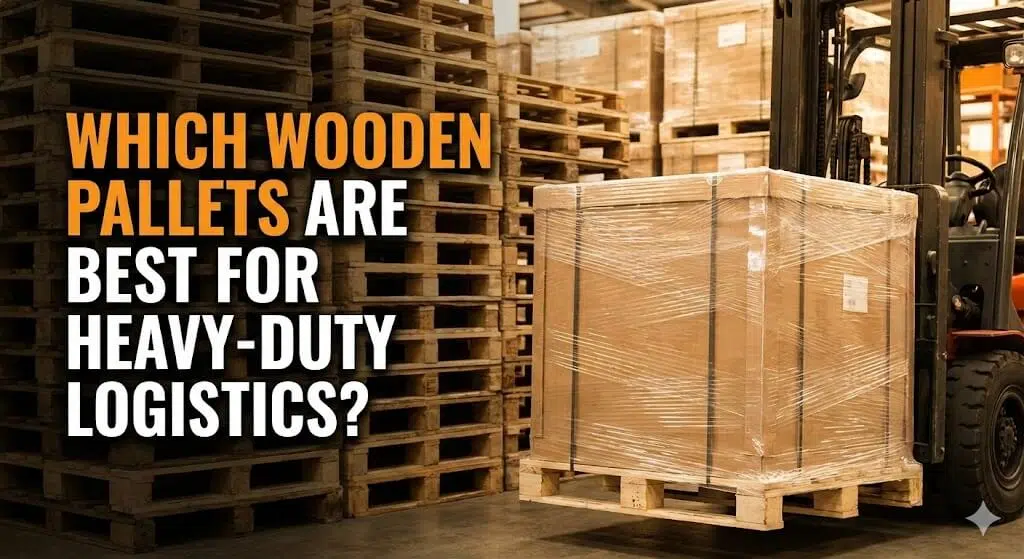
Heavy-duty logistics demands strength, durability, and reliability at every stage of the supply chain. Whether your business handles industrial machinery, automotive parts, construction materials, FMCG bulk loads, or export shipments, the pallets you choose directly impact safety, cost, and efficiency. This guide is designed to answer the most important question: The best wooden pallets for heavy-duty logistics are hardwood pallets, heavy-duty block pallets, double-faced pallets, and custom-engineered industrial pallets.These pallets offer high load capacity, maximum rigidity, better forklift access, and compliance with international shipping standards like ISPM-15. Let’s explore each type in detail so you can make the right choice for your business. 1. What Is Considered Heavy-Duty Logistics? Heavy-duty logistics involves transporting goods that are: Very heavy (1,000–3,500+ kg per load) Bulky or oversized Fragile but weight-intensive Value-intensive and sensitive Exported across long distances Common examples include: ✔ Automotive engines✔ Industrial machinery✔ Metal sheets and steel coils✔ Bulk FMCG & chemical drums✔ Construction materials✔ Large appliances✔ Palletized export goods These goods require strong, stable, and load-tested wooden pallets that can withstand pressure, movement, and long storage times. 2. Why Wooden Pallets Are the Best Choice for Heavy Loads Wood remains the industry standard for heavy-duty operations because it offers: ✔ High weight capacity ✔ Excellent strength-to-cost ratio ✔ Easy repairs and long lifespan ✔ Better friction and load stability ✔ Heat-treatment (ISPM-15) options for export ✔ Full customizability ✔ Universal forklift compatibility Compared to plastic and metal pallets, wooden pallets deliver superior performance without the high cost. 3. Best Wooden Pallets for Heavy-Duty Logistics Below are the most reliable and widely used pallet types for industrial and export environments. A. Hardwood Wooden Pallets (Best Overall Strength) Hardwood pallets made from oak, mahogany, maple, eucalyptus, neem, or beech are the strongest option available. ✔ Why They’re Perfect for Heavy Loads: Extremely high density Strong resistance to cracking Long lifespan Excellent nail-holding capability Perfect for rough warehouse handling Load Capacity: 1,500 – 3,500+ kg Best Suited For: Machinery & automotive parts Construction materials Export shipments Metal industry products B. Heavy-Duty Block Pallets (Maximum Forklift Stability) Block pallets use solid blocks instead of thin stringers, making them extremely strong and forklift-friendly. ✔ Benefits: True 4-way forklift entry Better stability during movement Reliable for high stacking Perfect for automated warehouses Load Capacity: 1,200 – 2,800 kg Best Suited For: Distribution centers Cold storage & FMCG Export logistics Automated conveyor systems C. Custom Industrial Wooden Pallets (Tailored for Special Loads) Custom pallets are engineered to match your product dimensions, weight, center of gravity, storage environment, and machinery needs. ✔ Customization Options: Extra-thick deck boards Additional reinforcement blocks Extended width/length Heavy base frame Moisture-resistant coating Specialized forklift notches Best Suited For: Oversized equipment Long or wide industrial components High-value or fragile but heavy goods D. Heat-Treated (ISPM-15) Wooden Pallets (Best for Export Loads) Heat-treated pallets are required for international shipping. ✔ Why They’re Ideal: Pest-free and fungus-free Low moisture content Stronger and more durable ISPM-15 certified for export Best Suited For: Export of heavy products Pharmaceuticals & FMCG Machinery headed overseas E. Double-Faced & Double-Wing Pallets (Extra Stability) These pallets have deck boards on both the top and bottom, providing balanced weight distribution. ✔ Benefits: Ideal for fragile yet heavy goods High stabilization Safer stacking Excellent for warehouse racks Load Capacity: 1,000 – 2,200 kg Best Suited For: Electronics Appliances Heavy cartons Fragile machinery components 4. Hardwood vs Softwood: Which Is Better for Heavy Loads? Here’s a simple comparison: Feature Hardwood Softwood Strength ⭐⭐⭐⭐⭐ ⭐⭐⭐ Durability Very High Medium Cost Higher Lower Best For Heavy loads Light–medium loads Export Use Excellent Good Lifespan Long Short Winner: Hardwood Pallets Softwood is only suitable for light to medium loads. Heavy-duty operations should always choose hardwood. 5. Key Features of a Heavy-Duty Pallet (Checklist) Use this checklist before choosing any pallet: ✔ High-density hardwood ✔ Thick deck boards ✔ Strong nails (ring shank/spiral) ✔ Reinforced bottom deck ✔ Heat-treatment stamp (for export) ✔ 4-way forklift entry ✔ Smooth finishing (no splinters) ✔ Moisture levels below 20% ✔ Load testing and certification ✔ Factory manufacturing consistency This ensures your pallets will not fail during operations. 6. Industries That Need Heavy-Duty Wooden Pallets ✔ Manufacturing Heavy components, gears, castings. ✔ Automotive Engines, transmissions, sheet metal. ✔ FMCG & Distribution Bulk cartons, liquid containers, warehouse automation. ✔ Construction Tiles, cement bags, pipes, and steel coils. ✔ Export & International Trade All ISPM-15 goods. ✔ Machinery & Industrial Equipment Oversized, fragile, or expensive goods. If your business falls into any of these categories, heavy-duty pallets are non-negotiable. 7. Cost of Heavy-Duty Wooden Pallets Pricing varies based on: Wood type (hardwood vs softwood) Pallet design (block, double-faced, custom) Load capacity Heat-treatment availability Order quantity Dimensions Reinforcement level Typical Price Ranges (Not exact — varies by country, supplier, and order size) Standard hardwood pallet: Medium cost Block pallet: Medium–high Double-faced pallet: Medium–high Custom industrial pallet: Higher cost Heat-treatment: +10–20% extra Even if hardwood pallets cost more initially, they save more money long-term through fewer replacements and reduced product damage. 8. How to Choose the Right Pallet for Your Business (Fast Guide) Follow these steps: Step 1 — Know your load weight Heavier loads require hardwood block or custom pallets. Step 2 — Consider product fragility Fragile heavy loads need double-faced pallets. Step 3 — Match pallet type to equipment 4-way block pallets are ideal for forklift/automation. Step 4 — Check export needs Choose heat-treated ISPM-15 pallets. Step 5 — Evaluate storage conditions Moisture exposure requires treated/fumigated wood. Step 6 — Ask for load-testing reports Ensure pallets are certified. Step 7 — Choose a reliable supplier Consistency is more important than low price. Final Recommendation: Best Pallets for Heavy-Duty Logistics Based on durability, stability, and industry performance, the top wooden pallets for heavy-duty logistics are: ⭐ 1. Hardwood Heavy-Duty Pallets Strongest, safest, longest-lasting. ⭐ 2. Block Pallets (4-Way Entry) Best for forklifts, automation, and high-volume warehouses. ⭐ 3. Custom-Engineered Industrial Pallets Ideal for unique or oversized loads. ⭐ 4. Heat-Treated ISPM-15